
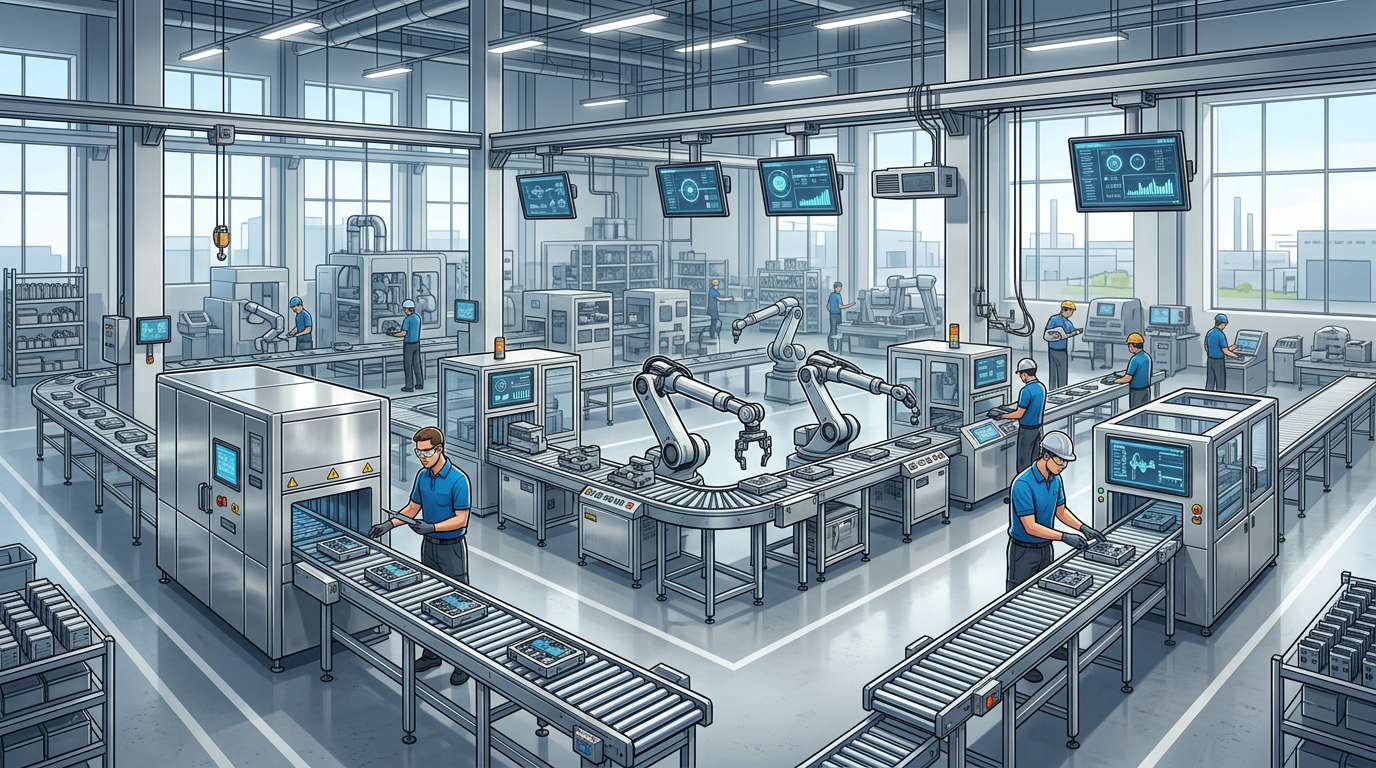
For small and medium-sized manufacturers across Egypt, Saudi Arabia, and the broader MENA region, maintaining competitive margins is more challenging than ever. Escalating raw material prices, fluctuating utility expenses, and labor overhead mean that traditional rule-of-thumb pricing no longer protects profitability. Too often, operational leakage happens directly on the production floor through undocumented scrap, uncalibrated batch formulas, machine downtime, and disjointed communication between procurement and shop managers.
The Anatomy of Hidden Production Costs
When leadership reviews quarterly income statements, discrepancies between projected production costs and actual expenditures are frequently attributed to broad inflation. However, granular analysis usually reveals persistent operational blind spots:
- Formula and Recipe Drift: Without standardized digital Bills of Materials (BOM), operators make on-the-fly substitutions or imprecise measurements, leading to high batch rejection rates.
- Unrecorded Material Waste: Scrap, trimming loss, and floor spillage often go unlogged until the physical inventory count at month-end, distorting real-time COGS (Cost of Goods Sold).
- Disjointed Machine Utilization: Idle capacity resulting from late raw material staging causes bottlenecks that ripple into expensive overtime shifts.
- Subcontracting and Rework Blind Spots: Secondary processing outsourced to third-party workshops without structured tracking frequently runs over budget and schedule.
Fixing these issues requires more than isolated spreadsheets; it demands a unified bridge connecting the workshop floor with finance, purchasing, and warehouse departments.
Building Digital Work Centers and Dynamic Bills of Materials (BOM)
The foundation of repeatable, cost-effective manufacturing lies in standardizing inputs and operations. In modern manufacturing management, a Bill of Materials is not merely a static ingredient or parts list; it is a dynamic operational roadmap.
1. Multi-Level BOMs for Complex Assembly
Whether producing packaged consumer goods, plastics, textiles, or metal fabrications, multi-level BOMs outline every component, sub-assembly, and consumable (including packaging tape, solvents, and lubricants) necessary to reach the finished stock unit. Documenting these requirements eliminates guesswork on the floor and ensures precise costing per run.
2. Defined Work Centers and Routing Steps
Every product follows a specific route across cutting, shaping, assembly, quality checks, and packaging. Defining realistic hourly machine costs, labor overhead, and setup times per work center allows operations managers to calculate absorption rates precisely. This eliminates the widespread error of applying a flat manufacturing overhead percentage across radically different product lines.
Aligning Floor Execution with Purchasing and Inventory
A major source of cost escalation in regional factories is reactionary purchasing. When the production manager realizes mid-shift that a critical dye, resin, or fastener is depleted, procurement is forced to execute emergency spot purchases at premium prices, often incurring express transport charges.
Material Requirements Planning (MRP) bridges this vulnerability by syncing production schedules directly with warehouse levels and open supplier purchase orders. Key operational safeguards include:
- Automated Work Order Allocation: When a sales order or replenishment quota triggers a work order, required inventory is automatically allocated and reserved, preventing other shifts from claiming the same materials.
- Accurate Scrap Tracking: Shop floor supervisors must record actual scrap versus expected yield at each operation. Identifying anomalies early enables immediate equipment recalibration rather than producing hundreds of non-compliant units.
- Traceability and Batch Management: Tracking lot numbers from incoming raw material inspection through to palletized finished goods mitigates the scope and expense of product recalls or customer warranty claims.
Connecting Operations to Financial Accounting
Controlling manufacturing costs requires real-time visibility into cost variance. When manufacturing operates independently of the finance department, executives only discover budget overruns weeks after finished goods have been delivered and billed.
Standard costing sets expectations; actual costing reveals operational truth. Effective cost control exists entirely in the disciplined management of the variance between the two.
An integrated environment enables automatic journal generation for:
- Work in Progress (WIP) Capitalization: Automatically moving raw material inventory values into WIP accounts as jobs are released.
- Direct Labor and Overhead Absorption: Crediting operational overhead and debiting active jobs according to verified shift logs.
- Finished Goods Receipt: Transferring capitalized costs from WIP to finished goods inventory upon final inspection clearance, giving sales teams exact unit margins.
Driving Factory Modernization with ORG ERP
Transitioning from manual tracking logs and fragmented spreadsheets to a structured, repeatable manufacturing workflow is a prerequisite for scaling industrial operations. Business owners need a unified platform that connects manufacturing, inventory, sales, purchasing, and general accounting without cumbersome technical overhead.
ORG ERP is a comprehensive cloud-based enterprise resource planning platform engineered to streamline business operations across the Arab world. By uniting core manufacturing modules—such as multi-level BOM management, work order routing, inventory tracking, procurement, and financial reporting—into a single web application, ORG ERP empowers operations leaders to maintain full visibility over their cost of goods sold. Whether coordinating multi-location warehouses, managing automated invoicing, or tracking real-time floor productivity, a centralized cloud platform ensures your teams operate from verified, actionable data.
Ready to standardize production, eliminate shop floor waste, and safeguard your operational profit margins? Explore how ORG ERP can support your factory's digital transformation today.

Comments (0)
No comments yet. Be the first!