
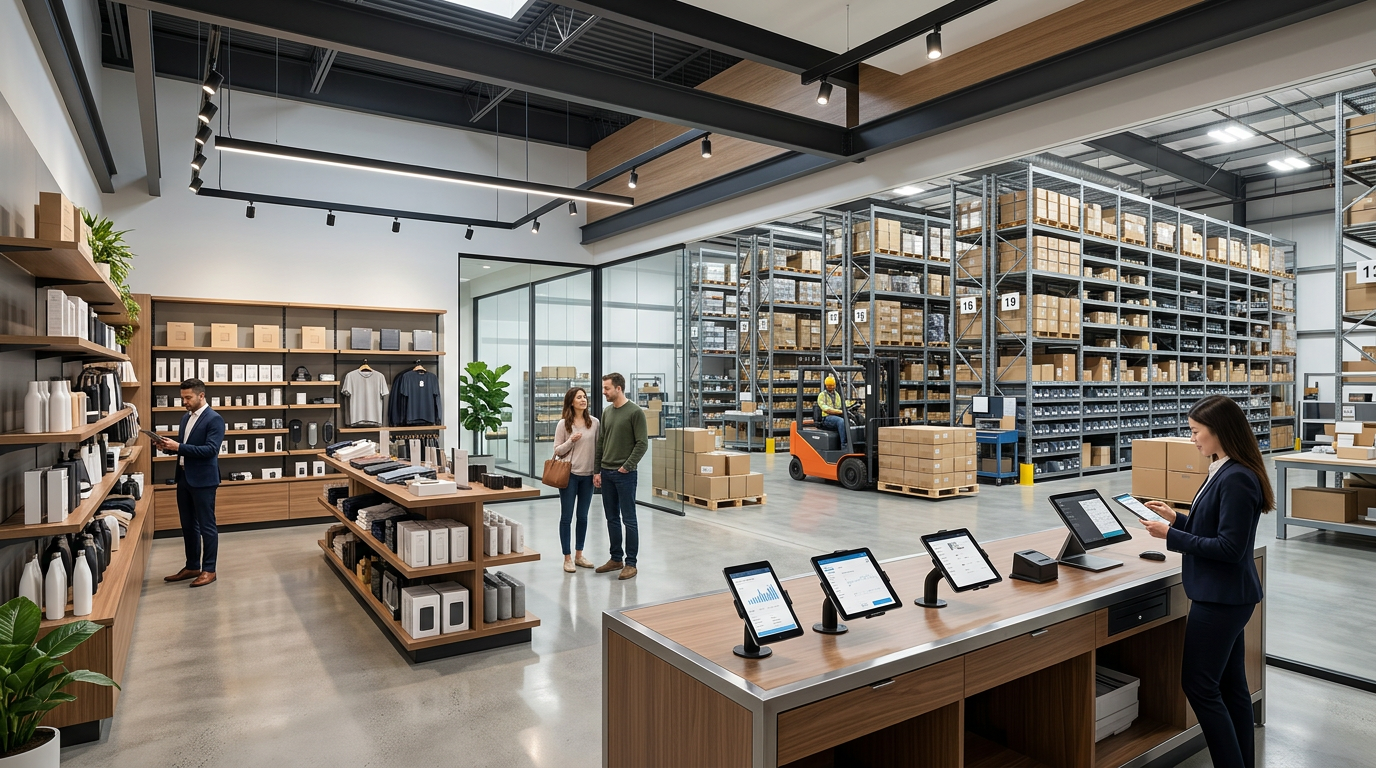
The Multi-Branch Dilemma in Modern Retail
Expanding from a single storefront to multiple retail branches is a milestone for any ambitious business in Egypt and across the wider Arab region. However, as the number of physical locations grows, operational complexity increases exponentially rather than linearly. Retailers frequently encounter broken communication channels, inconsistent pricing, fragmented inventory, and delayed financial reporting.
When each branch operates as an isolated island, business owners lose real-time visibility. Stockouts occur at high-performing locations while identical goods gather dust in a warehouse across town. Cash reconciliation turns into a daily headache, and managerial decisions are made based on stale data. To scale profitably, retailers must replace disjointed manual practices and isolated point-of-sale software with unified operational frameworks.
1. Centralized Inventory Control vs. Local Stockouts
One of the most persistent issues multi-location retailers face is inventory imbalance. Traditional systems require branch managers to manually submit stock requests via spreadsheets, messaging apps, or phone calls. By the time central procurement acts, the customer has moved on to a competitor.
Real-Time Stock Visibility
An integrated approach provides a bird’s-eye view of inventory across every sales channel, warehouse, and store. Store associates can instantly verify whether an out-of-stock item is available at an adjacent branch or central depot, allowing for customer reserve options or fast inter-branch transfers.
- Inter-Branch Transfers (IBTs): Standardize the process of requesting, approving, and dispatching stock between locations without losing trace of items in transit.
- Automated Reorder Points: Configure safety stock levels based on branch-specific sales velocity rather than applying a flat rule to every shop.
- Shrinkage and Discrepancy Auditing: Conduct cycle counts regularly without shutting down daily branch operations, identifying variance before it impacts financial statements.
2. Synchronizing Point of Sale (POS) and Financial Ledgers
In many businesses, the retail POS exists independently of the back-office accounting software. At the end of every shift or month, accountants must import, reformat, and reconcile endless sales batches. This latency obscures the real financial picture and invites human entry error.
When point-of-sale terminals feed directly into the central general ledger, several operational friction points disappear:
- End-of-Day Cash Balancing: Daily register closures, petty cash disbursements, and bank drops are validated immediately against expected register totals.
- Diverse Payment Method Reconciliation: Track cash, debit cards, mobile wallets, and buy-now-pay-later (BNPL) schemes side-by-side with automatic payment gateway clearing accounts.
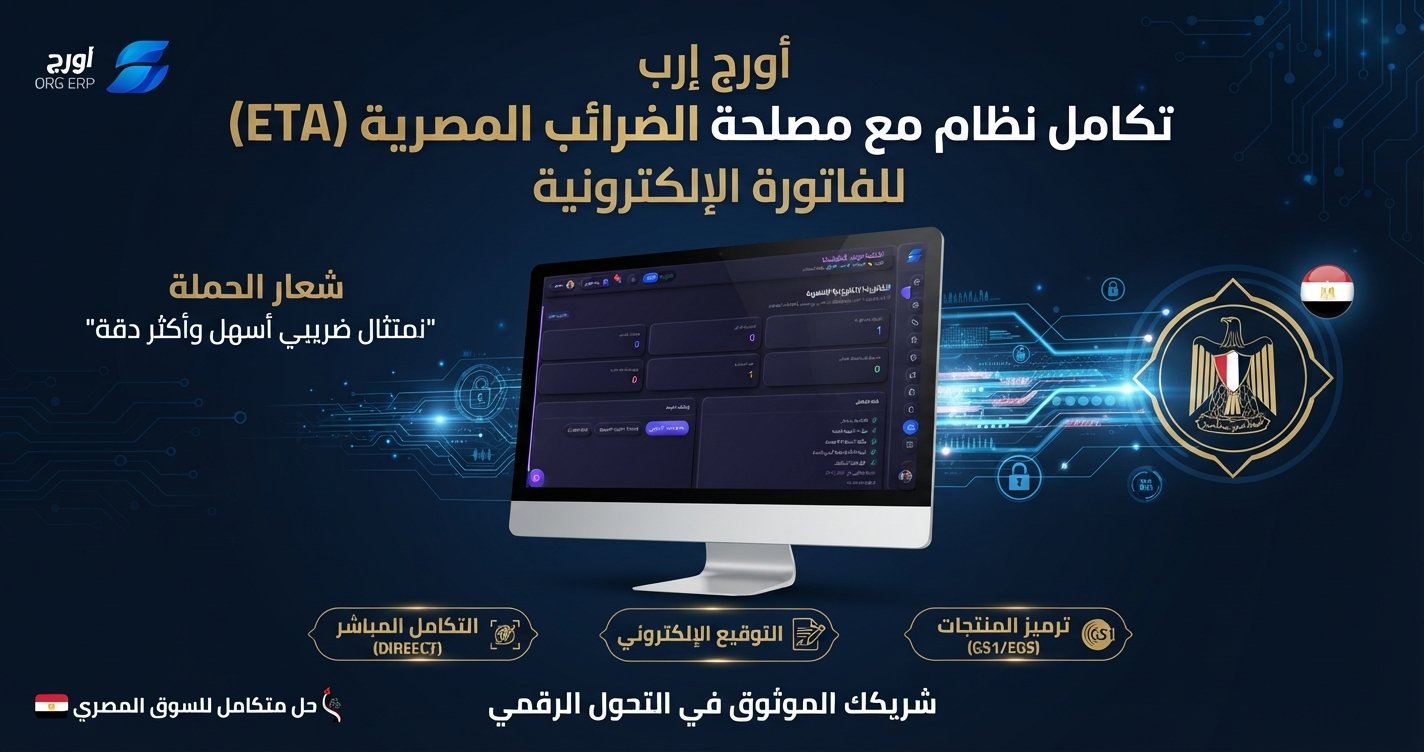
- Unified Tax Compliance: Manage regional sales tax rules and electronic invoicing obligations seamlessly across all branches from a single source of truth.
3. Standardizing Pricing, Promotions, and Customer Loyalty
Maintaining brand consistency becomes harder with every new branch opened. Running promotions or revising seasonal prices across multiple stores often leads to errors where outdated price tags or uncoordinated discounts erode margins.
Centralized retail management ensures that pricing policies, bundle offers, and promotional calendars are defined once by head office and propagated across all stores instantly. Furthermore, modern shoppers expect a cohesive experience:
A customer who earns loyalty points at a branch in New Cairo should be able to redeem them that same evening at a branch in Alexandria without friction or manual verification.
A connected system ensures that customer profiles, purchase histories, and credit accounts update across the network in real time.
4. Streamlining Procurement and Central Distribution
Purchasing inventory separately for individual branches eliminates bulk purchasing power and multiplies administrative overhead. Centralizing purchasing allows regional retailers to negotiate better payment terms, volume discounts, and delivery schedules with suppliers.
The Hub-and-Spoke Distribution Model
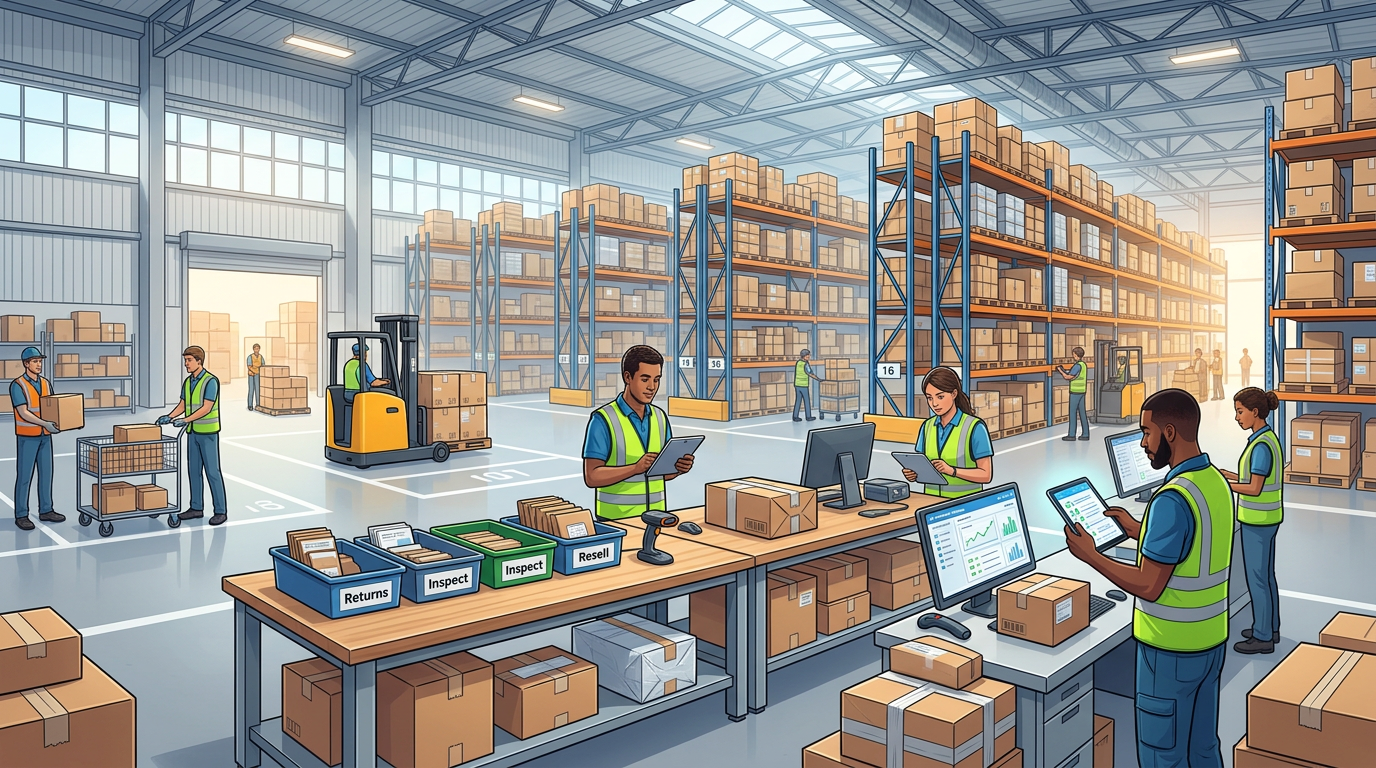
Many successful retailers in the region adopt a central hub-and-spoke warehouse model. Suppliers deliver large orders directly to a primary distribution center, which then replenishes smaller store locations on a fixed weekly schedule. Managing this structure requires integrated visibility across purchase orders, goods receipts, storage allocations, and outbound transit notes.
- Purchase Order Generation: Centralized demands consolidate branch replenishment needs into single, cost-effective supplier orders.
- Goods Receipt Note (GRN): Quality checks and quantity verifications happen at the central warehouse before distribution.
- Fulfillment & Dispatch: Scheduled replenishment batches prevent regional stores from holding excess working capital in backroom storage.
5. Empowering Branch Managers Without Losing Central Governance
Striking the right balance between branch autonomy and corporate oversight is critical. If branch managers need central approval for every routine task, operations grind to a halt. Conversely, zero oversight invites rogue discounting and inventory loss.
A modern enterprise platform allows executive teams to establish granular role-based permissions:
- Branch managers can manage shift rosters, monitor daily sales targets, and initiate stock replenishment orders.
- Discount limits, credit line adjustments, and stock write-offs remain locked behind tiered managerial approval workflows.
- Executive dashboards offer instant comparison of branch performance, highlighting top-selling product categories, staff productivity, and operating expenses per square meter.
Scaling Your Retail Business with ORG ERP
Overcoming multi-branch retail fragmentation requires a robust digital foundation. ORG ERP is an all-in-one cloud ERP system engineered to help businesses manage their core operations seamlessly. By unifying accounting, inventory, purchasing, sales, POS, CRM, manufacturing, and HR in a single platform, ORG ERP eliminates information silos and delivers real-time visibility across all your business locations.
Whether you manage a growing retail chain, a wholesale operation, or a combined distribution network, cloud-based connectivity ensures your branches, warehouses, and executive teams stay aligned on a single system.
Ready to streamline your multi-branch operations and take control of your retail network? Discover how ORG ERP can modernize your business management today.

Comments (0)
No comments yet. Be the first!